Precision Engineering of HICLOVER Waste Incinerators: Technical Insights and Market Analysis
Introduction to HICLOVER Waste Incinerators
Within today’s evolving industrial landscape, technical reliability and compliance are paramount. HICLOVER waste incinerators have emerged as a robust solution, particularly as an **incinerator for infectious waste** that meets stringent industrial standards. These systems adhere to **medical incinerator operating temperature standards**, maintaining controlled temperature ranges between 800°C and 1200°C to ensure effective destruction of hazardous materials. Engineered to support continuous operation in critical environments, waste incinerators by HICLOVER are designed for sectors that demand reliability, including healthcare, industrial waste management, and biohazardous applications.
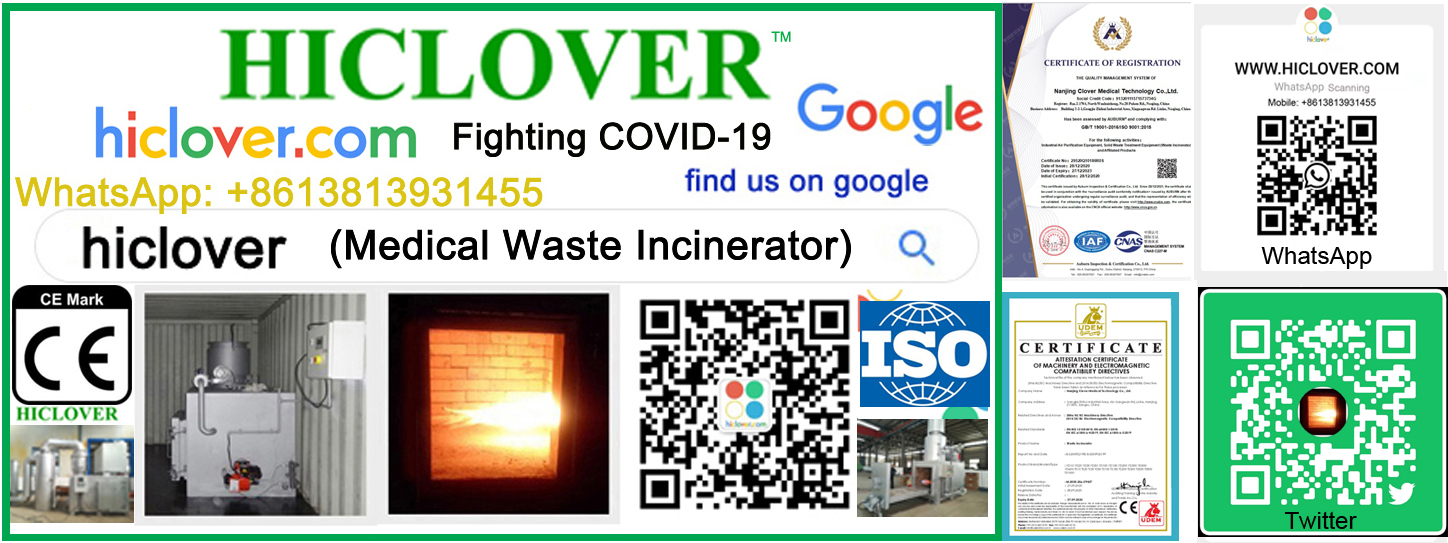
The integration of cutting-edge automation through PLC control, alongside manual overrides, ensures that these systems maintain operational precision even under emergency conditions. HICLOVER’s factory-manufactured solutions feature dual combustion chambers, which significantly enhance high-temperature retention and minimize pollutant emissions. As global infectious disease preparedness and crisis zones call for dependable waste management, HICLOVER waste incinerators stand out as a technically advanced choice for investors and business partners seeking superior engineering and validated performance.
Technical Specifications and Engineering Principles
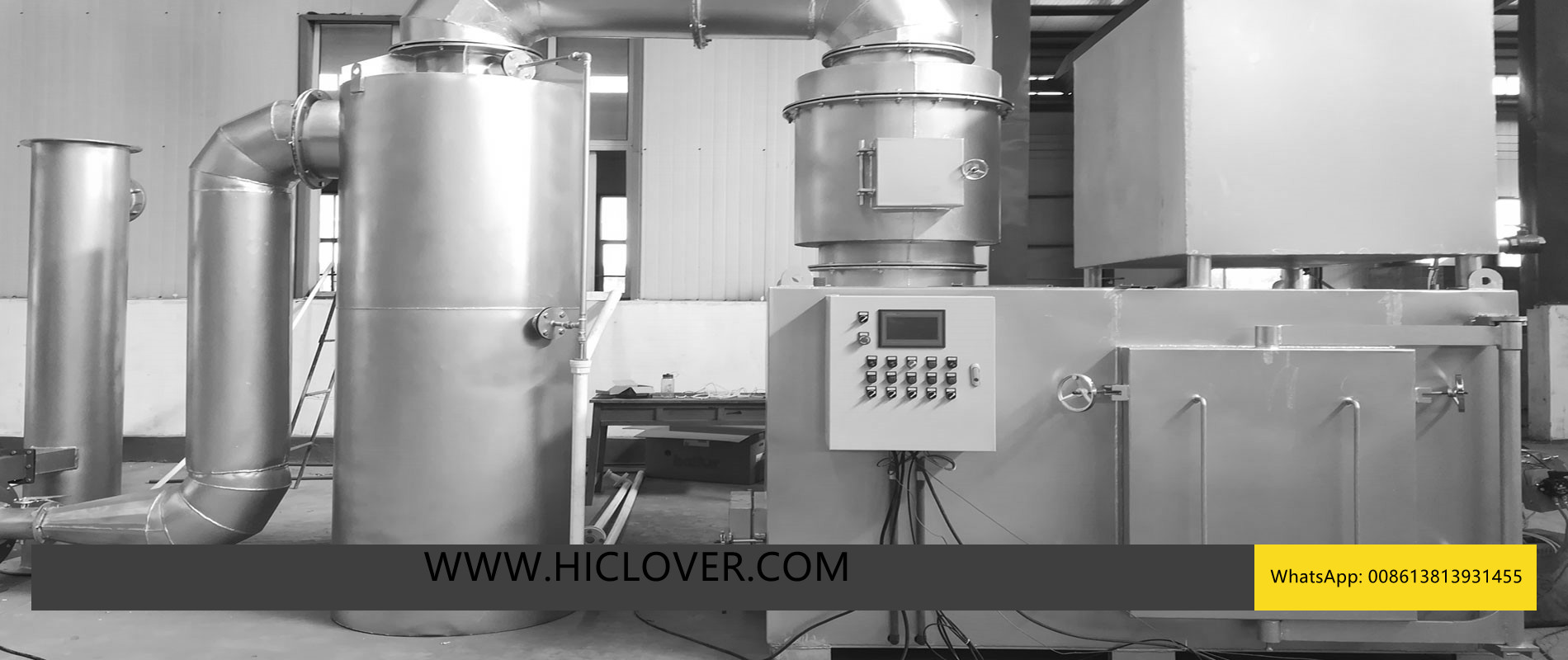
HICLOVER waste incinerators are built on a foundation of rigorous engineering principles that balance environmental concerns with industrial efficiency. One of the key technical features is the dual combustion chamber system, engineered to maximize chemical reaction completeness while maintaining stringent temperatures. The initial combustion chamber rapidly elevates the temperature to facilitate the breakdown of organic compounds, after which the secondary chamber ensures further destruction of residual toxins. This two-stage process improves overall thermal resilience, ensuring high-temperature retention essential for managing biohazardous materials.
Advanced design considerations include thermal insulation and refractory materials that extend the life of internal components and ensure consistent performance. For instance, the integration of a PLC-controlled automated system not only standardizes operation but also provides real-time monitoring, ensuring adherence to regulatory temperature ranges and emissions standards. Moreover, HICLOVER waste incinerators operate with an impressive degree of precision—achieving effective combustion through rapid oxidization while maintaining the temperature thresholds necessary for eliminating infectious agents.
A significant advantage is the multi-fuel capability, allowing operation on diesel, LPG, or natural gas. This versatility addresses challenges in remote mining or oil camps and decentralized waste management scenarios. Detailed engineering parameters, such as combustion chamber volume customization and digital automation in industrial equipment, underscore the HICLOVER commitment to both environmental compliance and operational excellence. This design is integrated with options to select between either a wet scrubber or a dry scrubber, with each system tailored to minimize emissions – a feature increasingly in demand as carbon emission reduction pressures mount globally.
Further technical details can be reviewed on the HICLOVER website, which outlines system configurations and engineering innovations in depth.
Regulatory Compliance and Operational Safety
Widespread adoption of HICLOVER waste incinerators is underpinned by their adherence to international and regional environmental regulations. These systems meet WHO guidelines and comply with EU emission frameworks, thereby ensuring that the incinerator’s operation aligns with global industrial safety practices. Detailed technical temperature standards and combustion principles are at the core of the design, guaranteeing that the systems operate within the parameters set for an **incinerator for incinerator for biohazardous waste**.
The dual combustion chamber design, for instance, is pivotal in controlling the combustion process to reduce particulate matter and nitrogen oxide emissions. By optimizing the gas residence time within the secondary chamber, engineers achieve a 99.99% incineration efficiency, ensuring that all potentially hazardous material is treated. This precise control is essential not only in urban waste treatment facilities but also in remote humanitarian camps and crisis zones, where the safe treatment of contaminated waste is non-negotiable.
Using both PLC automation and manual interventions, HICLOVER incinerators offer operational flexibility while providing robust safety interlocks. The systems are equipped with redundant safety features that monitor temperature and pressure to trigger emergency shutdowns if critical limits are exceeded. Additionally, an investigation into standards like the medical incinerator secondary chamber temperature standard offers stakeholders clear guidance on performance metrics. This commitment to compliance not only mitigates environmental risks but also provides a stable foundation for certifications and continued use in sensitive applications.
The engineering experience embedded in HICLOVER products assures potential investors and business partners of a safe, efficient, and environmentally responsible incineration process. Such meticulous adherence to regulatory references reinforces the global competitiveness of HICLOVER’s waste management solutions.
System Variations, Control Options, and Modular Designs
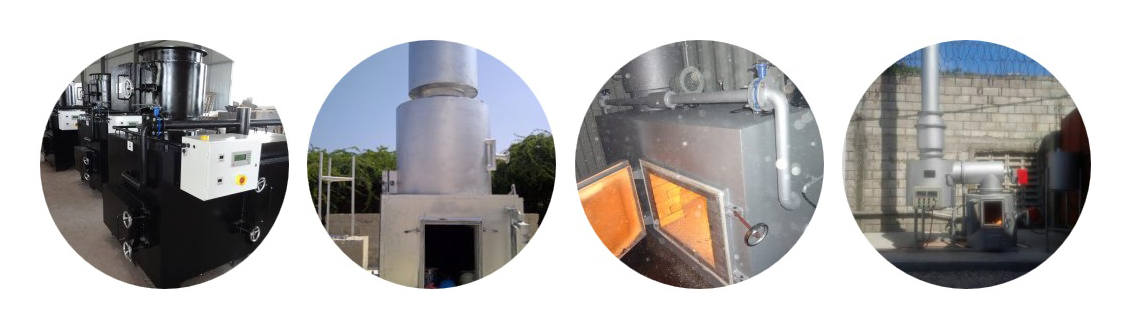
HICLOVER’s product line features significant variations designed to address a broad spectrum of applications. Among these variations are fixed installations for established healthcare facilities, containerized mobile systems suitable for remote or temporary sites, and mobile incinerators featuring plug-and-play designs tailored to crisis zones and emergency response scenarios. The modular containerized design caters to decentralized waste management, allowing for rapid deployment in remote mining/oil camps or humanitarian camps where speed and reliability are critical.
One of the distinguishing features is the incorporation of both PLC automation and the option for manual control, giving operators the flexibility to adjust settings under varying operational conditions. Enhanced digital automation in industrial equipment ensures that real-time data is collected and analyzed, allowing for prompt adjustments in combustion parameters. The system’s flexibility also extends to the integration with dry scrubbers or wet scrubbers, depending on the specific emission control requirements and local regulatory mandates.
The incinerator price list remains competitive due to HICLOVER’s direct factory manufacturing capability, which eliminates intermediary costs and mitigates supply chain risks. Coupled with customizable chamber volumes and multi-fuel options, the platform’s design supports a wide range of operational capacities. Such adaptability is particularly advantageous in regions that face significant carbon emission reduction pressures and stringent ESG compliance standards.
Further comparisons between fixed incinerators and containerized mobile variants show that while fixed systems offer stability and comprehensive installation, containerized systems provide mobility, making them ideal for remote site suitability. Their quick assembly and disassembly process, facilitated by integrated digital automation, ensures that even under dynamic operational conditions, the integrity of the combustion and scrubbing process is maintained.
Commercial Investigation: Market Positioning and Price Analysis
For investors and business partners, understanding the market dynamics and incinerator price list is crucial. HICLOVER waste incinerators command attention due to their combination of advanced engineering, robust operational safety, and flexible design options. Factory direct supply not only ensures competitive pricing but also provides customers with a customizable solution that can be tailored to the specific requirements of regional waste management frameworks. The economic stability offered by HICLOVER is further demonstrated through its stable supply chain and factory manufacturing capability, which outpace many trading companies.
The product’s competitive advantage is clear when considering options like fixed versus containerized systems. In scenarios where remote installation is essential, containerized modular systems can rapidly be deployed while minimizing installation costs and ensuring compliance with global infectious disease preparedness measures. Furthermore, integrated features such as PLC-controlled automation significantly improve operational efficiency. The engineering experience behind these systems supports reliable performance under demanding conditions, making them notably attractive in markets emerging from crisis zones or remote mining/oil camps.
In addition to the technical advantages, the incinerator price list highlights affordability factors made possible by direct factory supply. Potential buyers can expect detailed quotations that reflect customization options, including adjustable chamber volumes and emission scrubber types. This tailored approach allows for a more accurate cost-benefit assessment while providing operational advantages via digital automation and energy recovery systems. The cost efficiencies are further enhanced by HICLOVER’s commitment to maintaining resilient supply chains, ensuring that clients receive timely deliveries and consistent product performance.
A thorough commercial investigation supported by recent market trends indicates that investors are increasingly focused on sustainable, factory-engineered solutions. The integration of global trends—such as supply chain resilience and carbon emission reduction—positions HICLOVER as a forward-thinking, reliable partner for effective biohazard waste management.
Advanced Automation, Energy Recovery, and Digital Integration
Digital automation in industrial equipment plays a pivotal role in modern waste management solutions. HICLOVER waste incinerators feature advanced PLC automation that not only regulates combustion but also synchronizes energy recovery systems with overall incinerator operations. With real-time monitoring and data integration, operators can adjust settings to optimize fuel consumption, monitor emission levels, and ensure that the incineration process complies with international standards.
This advanced digital integration extends to energy recovery systems that capture waste heat from the combustion process and convert it into usable energy. Such systems are particularly valuable in contexts where energy consumption is high and efficiency is a competitive advantage. These features are supported by mobile plug-and-play design characteristics that allow for rapid integration into existing industrial processes, thereby reducing the overall carbon footprint and aiding in ESG compliance.
The dual combustion chambers, combined with digital automation, provide a comprehensive solution that is both safe and efficient. The robust automation capability enhances system reliability and stability, which is critical in industrial scenarios such as remote mining/oil camps and decentralized waste management operations. Moreover, the system’s advanced energy recovery mechanism not only optimizes fuel efficiency but also aligns with the increasing pressure to reduce carbon emissions on a global scale.
A deeper technical insight, available through industry research and the medical incinerator secondary chamber temperature standard, confirms that the meticulous engineering behind these systems significantly improves operational safety and reliability. This integration of energy recovery and digital control enables businesses to meet global infectious disease preparedness demands while reducing energy costs—an important factor for modern industrial operators.
Global Trends and Future Directions in Waste Incineration
The waste management industry faces transformative challenges, driven by global trends such as increased infectious disease preparedness, heightened ESG compliance measures, and the need for decentralized waste management in crisis zones. HICLOVER waste incinerators are designed with these trends in mind. In particular, the systems provide a dependable solution for handling biohazardous materials in situations where conventional waste management practices prove inadequate. This is of particular relevance in humanitarian camps or regions experiencing rapid industrial expansion.
Emerging trends also focus on supply chain resilience and digital automation in industrial processes, integrating advanced sensors and internet-of-things (IoT) technologies to monitor performance in real time. Such innovations not only drive operational efficiencies but also ensure that incinerators maintain regulatory compliance under varying environmental conditions. The ability to retrofit existing systems with energy recovery units and digital control modules further enhances the market appeal. For instance, the integration of energy recovery systems contributes to carbon emission reduction—a critical metric as global industries strive to mitigate environmental impacts.
The anticipated evolution of incinerator technology will likely emphasize mobile modular solutions that can be rapidly deployed in remote areas, such as oil camps or mining sites. With integrated digital data analytics and automation, these systems can adapt to rapidly changing operational environments. Consequently, investors have increasingly recognized the potential for long-term returns within this sector, especially as the emphasis on sustainable and decentralized waste management continues to gain traction globally.
In addition, the critical interplay between technical specifications, regulatory safety, and economic viability continues to propel HICLOVER’s waste incinerator offerings. Global infectious disease preparedness, crisis zones and humanitarian camps, and carbon emission reduction pressure are all integral themes driving innovation within this market. This alignment with global trends not only bolsters operational confidence but also enhances the system’s appeal to a worldwide audience that prioritizes both technology and environmental responsibility.
Factory Capabilities and Competitive Advantages
HICLOVER’s position as a factory-direct manufacturer enables a level of customization and reliability rarely matched by trading companies. The engineering experience across multiple waste incinerator models provides clients with solutions tailored to specific operational needs. With a significant focus on stable supply chain management, HICLOVER offers customized chamber volumes, integrated digital automation, and multi-fuel capabilities that enhance operational efficiency and flexibility.
This manufacturing approach is particularly beneficial when considering the incinerator price list provided to potential investors and business partners. Direct factory supply translates to competitive pricing without compromising the quality or durability of the system. The robust design, which includes dual combustion chambers, PLC automation, and the option for both wet and dry scrubbers, positions HICLOVER waste incinerators as a reliable asset in high-demand sectors such as healthcare waste and industrial incineration.
Moreover, the containerized modular systems enable rapid deployment in remote or unstable regions. This capability is crucial for applications in crisis zones or decentralized waste management schemes where traditional infrastructure is lacking. In such cases, the mobile plug-and-play design, combined with direct factory support, ensures that operations can be maintained with minimal downtime—a critical factor for global infectious disease preparedness.
The enhanced customization means that clients can choose from a range of control options, including fully automated systems with PLCs or hybrid models that offer manual intervention when necessary. This operational flexibility, coupled with the assurance of a stable supply chain, builds confidence in HICLOVER’s market positioning. The engineering expertise inherent in HICLOVER’s products is a key differentiator, as it guarantees performance under varying operational stresses and evolving regulatory landscapes.
By ensuring that each incinerator is built to meet precise industrial standards and incorporating feedback from real-world applications, HICLOVER continues to set benchmarks in efficiency and safety. This rigorous approach not only validates the product lineup on technical grounds but also fortifies the brand’s reputation as a leader in waste incineration solutions.
Market Impact and Strategic Considerations
The widespread adoption of HICLOVER waste incinerators is underpinned by strategic market considerations that align with current social, economic, and regulatory trends. With a focus on cost efficiency and practical application, HICLOVER leverages its advanced factory manufacturing capabilities to offer customized solutions directly to end-users. This strategy ensures that both the **incinerator for infectious waste** and the systems designed to handle **incinerator for incinerator for biohazardous waste** remain at the forefront of the market.
The robust engineering design – incorporating features such as dual combustion